A Revitalization: How Tryon Could Transform the National Horse Show
For Immediate Release
March 24, 2026 – Wellington, Florida - For generations, the National Horse Show has represented one of the sport’s most storied traditions—the destination show where the country’s top horses and riders meet in the fall to conclude the East Coast fall indoor shows. Held in New York City’s Madison Square Garden for most of its 140-year history, the National is for many riders a career goal, and its significance extends far beyond a date on the calendar. The show is a national championship stage that for generations has hosted the very best in hunter, jumper, and equitation competition.
With horse welfare, safer stabling, and modern preparation spaces at the forefront, however, many top professionals believe relocating the National to the Tryon International Equestrian Center is the show’s strongest path forward for 2026 and beyond. This year’s competition is scheduled to take place October 21-25 and October 27-November 1 pending approval from the U.S. Equestrian Federation.
That’s precisely why recent conversation around the show’s future has become so passionate. At its core, the discussion isn’t simply about geography—and relocating the show from the Kentucky Horse Park, its home for the past 15 years. It’s more about preserving an institution by giving it a setting that better serves today’s horses and horsemen.
The concern, those involved say, began with serious questions about the practical realities of holding the show at the Kentucky Horse Park late in the season. While the KHP remains a beautiful venue and an important part of equestrian sport, many professionals believe that what works well there during peak summer competition can become far more difficult in the fall when weather conditions shift.
The biggest issue repeatedly raised was horse welfare. In particular, many people note the shed-row style stabling and weather exposure doesn’t offer the appropriate environment horses need during a major indoor final in late October and early November. When rain, wind, and cold enter the equation, concerns multiply—not just for comfort, but for soundness, routine, and basic horsemanship.
That concern was the catalyst for action. During last year’s National Horse Show, a group of top professionals began talking about what they were seeing and experiencing on the ground. Those conversations evolved into the Professional Horsemen’s Coalition, composed of many of the sport’s most experienced and respected voices.
The group includes trainers, judges, stewards, show managers, and individuals who have played major roles in shaping some of the sport’s most important programs and championships. Their concerns came from years of experience understanding what high-level competition requires behind the scenes. From the coalition’s perspective, the question became straightforward: What kind of venue gives the National Horse Show the best opportunity to protect the horses, support the exhibitors, and restore the event to the level of prestige it once enjoyed.
For many of them, the Tryon International Equestrian Center answered that question more convincingly than other available options.
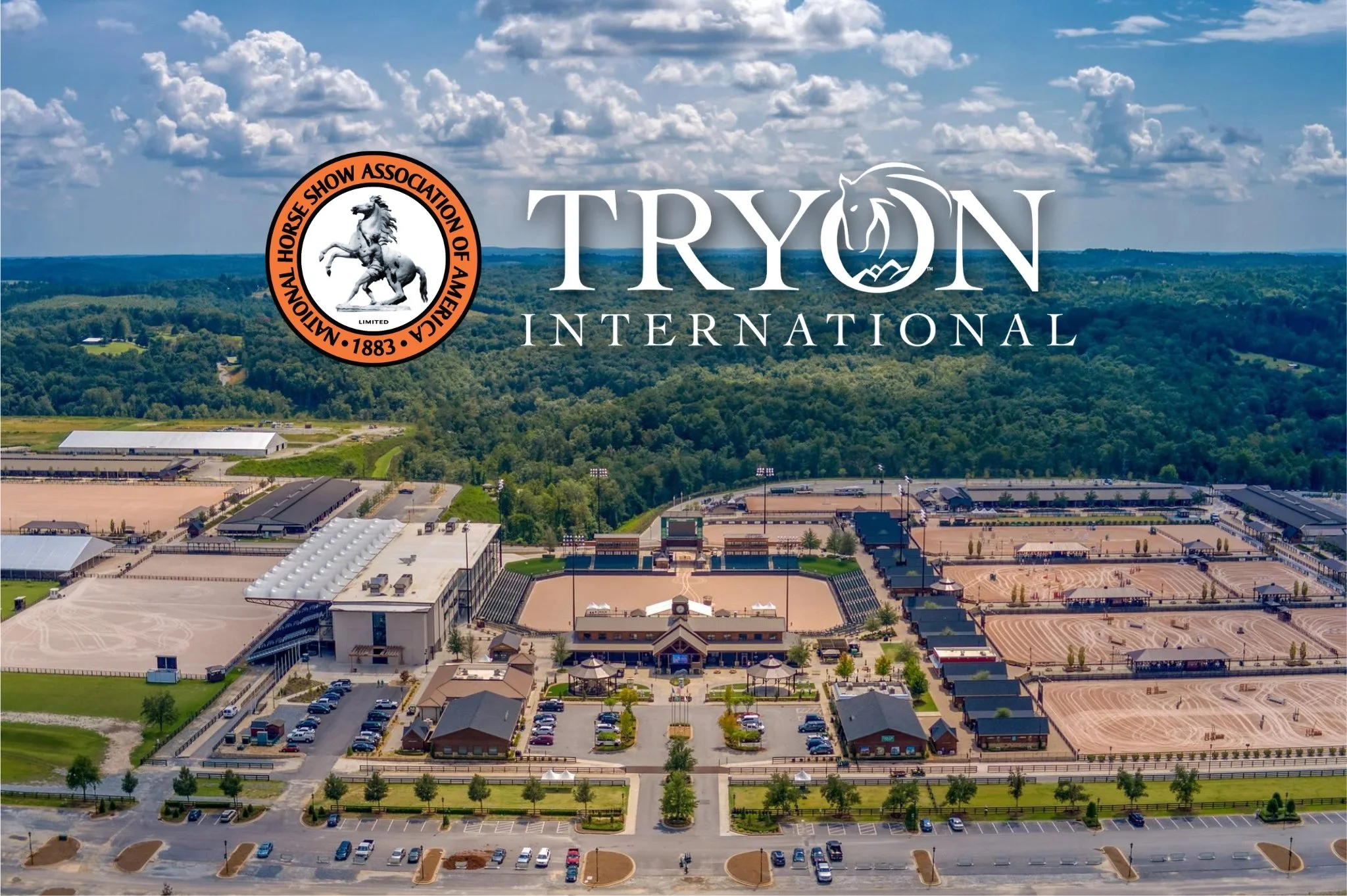
At Tryon, exhibitors would benefit from a layout designed with safety and comfort at the forefront. Supporters of the move identify the availability of indoor barn stabling rather than exposed shed rows. Just as important is the amount of usable preparation space. Tryon offers not only a major stadium, but also a complex of two attached indoor arenas and nearby covered spaces that can be used for longeing, flatwork, and warm-up. For those who have spent years navigating cramped or weather-compromised, dark schooling areas, that’s more than a convenience—it’s a safety issue for riders and horses.
That point becomes especially important for the ASPCA Maclay National Championship, where preparation is vital, and riders and trainers need a safe system for preparation in the early hours prior to the 7 a.m. start.
Another advantage often cited is the operational structure behind the facility. Tryon’s leadership and ownership are seen by proponents as deeply invested in making a marquee event succeed. Those close to the discussions describe a team willing to collaborate, problem-solve, and tailor the experience in a way that reflects the importance of the National Horse Show to make it special.
Supporters of the move believe that relocating to Tryon could help the National Horse Show recapture some of the atmosphere and aspiration that once defined it as the social event of the season in addition to the pinnacle horse show.
That vision means creating an environment where junior riders see they are stepping into something important. It means giving trainers and owners confidence that the horses are being managed in a humane, practical, modern setting. And it means presenting the sport in a way that encourages the next generation to watch, learn, and dream bigger.
Many longtime horsemen still remember when the National Horse Show was a showcase, and it was standing room only at the Garden with patrons dressed in black tie and gowns. (Some enterprising young riders learned to sneak up the long ramp to catch a glimpse of their favorite icons of the sport when tickets were sold out!). It was the chance to watch the greatest professionals, rising stars, equitation finals, and major international show jumpers all under the umbrella of one iconic event. While the sport has changed, that sense of inspiration remains worth pursuing. If Tryon can provide the physical setting to support that ambition, then the move may represent more than relocation. It may represent renewal by those who wish to see it return once again to the forefront of the indoor season.
Of course, any change of this magnitude invites skepticism. Some people will always associate the National Horse Show with a different place, a different era, or a different format. Others may have their own reservations about Tryon based on past experiences or perceptions. Those concerns are understandable. But supporters of the move argue that the current environment calls for looking carefully at what horses and exhibitors need now—not what felt familiar years ago.
For the Professional Horsemen’s Coalition and other proponents, the move to Tryon is ultimately an act of stewardship. They’re not trying to diminish the National Horse Show’s history; they’re trying to protect it. In their view, honoring a tradition means being willing to evolve when the welfare of the horses and the future of the event demand it.
If Tryon delivers on the promise so many see in it, exhibitors may find that the most meaningful difference is not simply that the National Horse Show has a new address. It’s that the horses arrive in a facility better suited to their needs, riders can prepare in a safer and more organized environment, and one of the sport’s great institutions is given room to become its best self again. For a show built on legacy, that may be the most important step forward of all.
Contact:
Professional Horsemen’s Coalition